
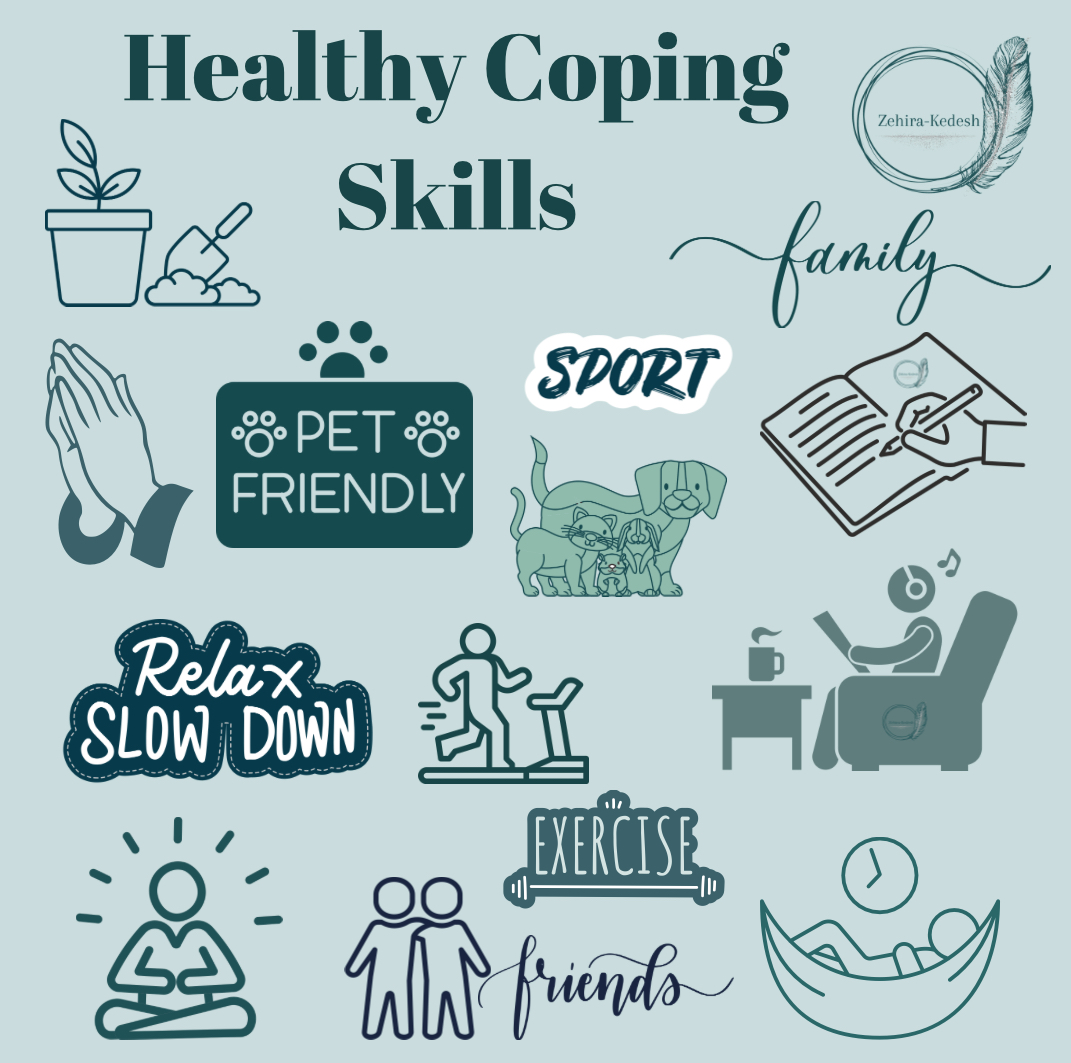

Healthy cOPING SKILLS - Part 1
Dear clients,
The term “coping” refers to a person’s ability to manage difficult situations in life. When we say a person is coping, we imply that they maintain a certain level of physical and emotional well-being despite their challenges.
Coping skills describe certain behaviors that will help restore a person's overall well-being by reducing the impact of the negative event on their body, mind and spirit.
The term "healthy coping skills" refers to skills that build you up as a person and enable you to function optimally without any negative consequences. Healthy coping skills will make you feel better about yourself and the situation while you are doing it AND after you've done it. It results in hopefulness and the belief that you might overcome the issue.
Here are some examples of healthy coping skills:
1) Gardening. Being outside in nature and breathing clean air can calm your mind and restore your well-being. This coping skill helps people to feel like they are in control of something and helps them attain a new perspective. For example, pulling out weeds can be symbolic of the "mental weeds" that they are dealing with in therapy like anger or low self-esteem. Similarly, planting new seeds may be viewed as symbolic of new growth in their relationships with significant others.
2) Prayer and spirituality. Many people turn to God during a crisis and make Him their anchor during the storm. Some studies have shown that religious or spiritual people tend to have a more positive outlook on life and recover quicker after a traumatic event.
3) Pets and other animals. Spending time with your pets or other animals can help reduce your overall stressors and help you find inner peace. Animals have zero expectations of us (other than to be cared for) and offer unconditional love in return. Pets can help us forget the negativity at work and contribute to our social well-being. For example, you can meet new people when you take your dog on a walk.
4) Sport. Playing sports can be a great way to relieve stress since it activates a brain chemical known as "dopamine" which is a feel-good hormone. Sport further enhances social cohesion (bonding and maintaining relationships with others) and improves physical well-being.
5) Family. Spending time with family can be beneficial for various reasons including stress relief, maintaining social cohesion, and obtaining support from people who know you best. (Note that family may not be a healthy coping strategy if they share your trauma. In this case, obtaining additional support outside of family will be wise.)
6) Journaling. This popular therapeutic technique offers a safe space to express your thoughts and feelings regarding an incident or a person. There are various ways that you can journal, however there is no "right" or "wrong" way to do it. Journaling is for and about you, so you don't need to worry about handwriting, grammar, spelling mistakes, etc.
7) Listening to music. Music influences your emotions in a way that very few things can. For example, listening to upbeat music when you are exercising may cause you to push yourself to go the extra mile. Depending on what you listen to, music can be a very therapeutic way to process what happened.
Healthy coping skills will always reduce your stress and anxiety. How you cope with a traumatic or stressful event will be based on your level of resilience, your past, your support structure, your knowledge of self, and your level of well-being before the event. There is always room to improve your coping skills and there is no shame in admitting this.
Remember: A good way to measure whether your coping skills are healthy is to ask yourself how you would feel about sharing your coping skills with other people. If you feel ashamed or embarrassed about sharing, this might be an indicator that your coping skills are unhealthy.
Be blessed,
Madeleine